警笛被車內聲音掩蓋Sirens compete with the cabin
車窗、空調、音樂與導航,都可能延後駕駛察覺的時間。Closed windows, climate control, music, and navigation can all delay awareness.

ClearWay 正在打造一套連結救護車端與汽車駕駛端的即時提醒系統。透過位置回傳、後端判定與低干擾音訊提醒,讓駕駛有更多時間觀察路況、穩定反應。ClearWay is building a low-distraction alert system that connects ambulance-side location data with drivers, creating more time to notice, assess, and respond safely.

CLEARWAY ALERT
救護車正在接近Ambulance approaching請留意周邊路況Stay aware of surrounding trafficFIELD EXCHANGE · TAINAN · 2026
這不是完整年表,而是四個關鍵節點:交代 ClearWay 如何從獲獎提案,走向即將展開的道路驗證。This is not a complete timeline. Four key steps show how ClearWay moved from an award-winning proposal toward upcoming road validation.
從問題探索與提案出發,獲得第一個實作起點。Problem discovery and proposal work created the project’s first implementation opportunity.
建立早期端到端 MVP,並先在校園內部驗證基本流程。Built an early end-to-end MVP and validated its basic flow through internal campus testing.
入選 10 組實踐隊伍,並獲頒和泰特別獎。Selected among 10 implementation teams and received the Hotai Special Award.
規劃於成大醫院周邊進行分階段、安全優先的道路驗證。Preparing staged, safety-led road validation around NCKU Hospital.
我們看見的問題The gap we see
在關閉車窗、開著冷氣、音樂或導航的車內,駕駛可能直到救護車非常接近時才察覺,也難以立即判斷來向與距離。ClearWay 想補上的,是救護車端與駕駛端之間的即時資訊缺口。Inside a closed car with air conditioning, music, or navigation running, a driver may not notice an ambulance until it is already close—or understand where it is coming from. ClearWay aims to close that information gap.
車窗、空調、音樂與導航,都可能延後駕駛察覺的時間。Closed windows, climate control, music, and navigation can all delay awareness.
即使聽見警笛,也可能需要反覆查看後照鏡,才能理解救護車從哪裡接近。Even after hearing a siren, drivers may need to scan repeatedly before understanding the approach.
知道得太晚,駕駛就更難在複雜路況中做出穩定、安全的反應。Late awareness leaves less room for a calm, safe response in complex traffic.
提醒如何抵達駕駛端How the alert reaches the driver
ClearWay 不替駕駛做決定,而是在可能需要注意時,提供一個簡短、低干擾的提醒。ClearWay does not make driving decisions. It offers a concise cue when extra awareness may be needed.
測試系統在必要同意與安全條件下,取得救護車端位置更新。Under agreed safety and consent conditions, the test system receives ambulance-side location updates.
後端比對位置與情境,判斷是否需要向符合條件的測試駕駛提醒。Backend logic compares locations and context to determine whether a test driver should be alerted.
駕駛端收到簡短、低干擾的音訊提醒,再依現場路況安全反應。A short, low-distraction audio cue supports earlier awareness while the driver responds to real road conditions.
從現場理解需求Learning from the field
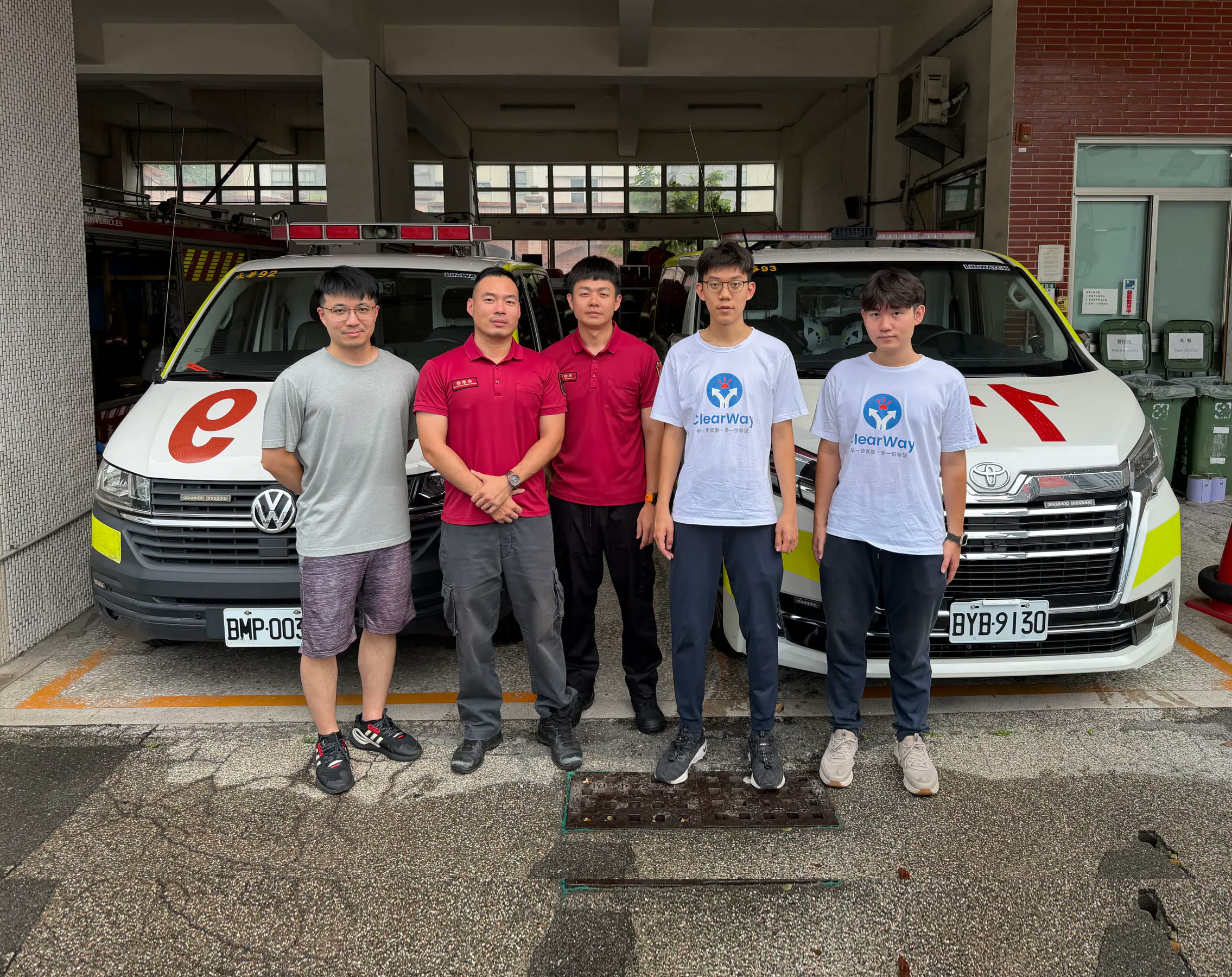
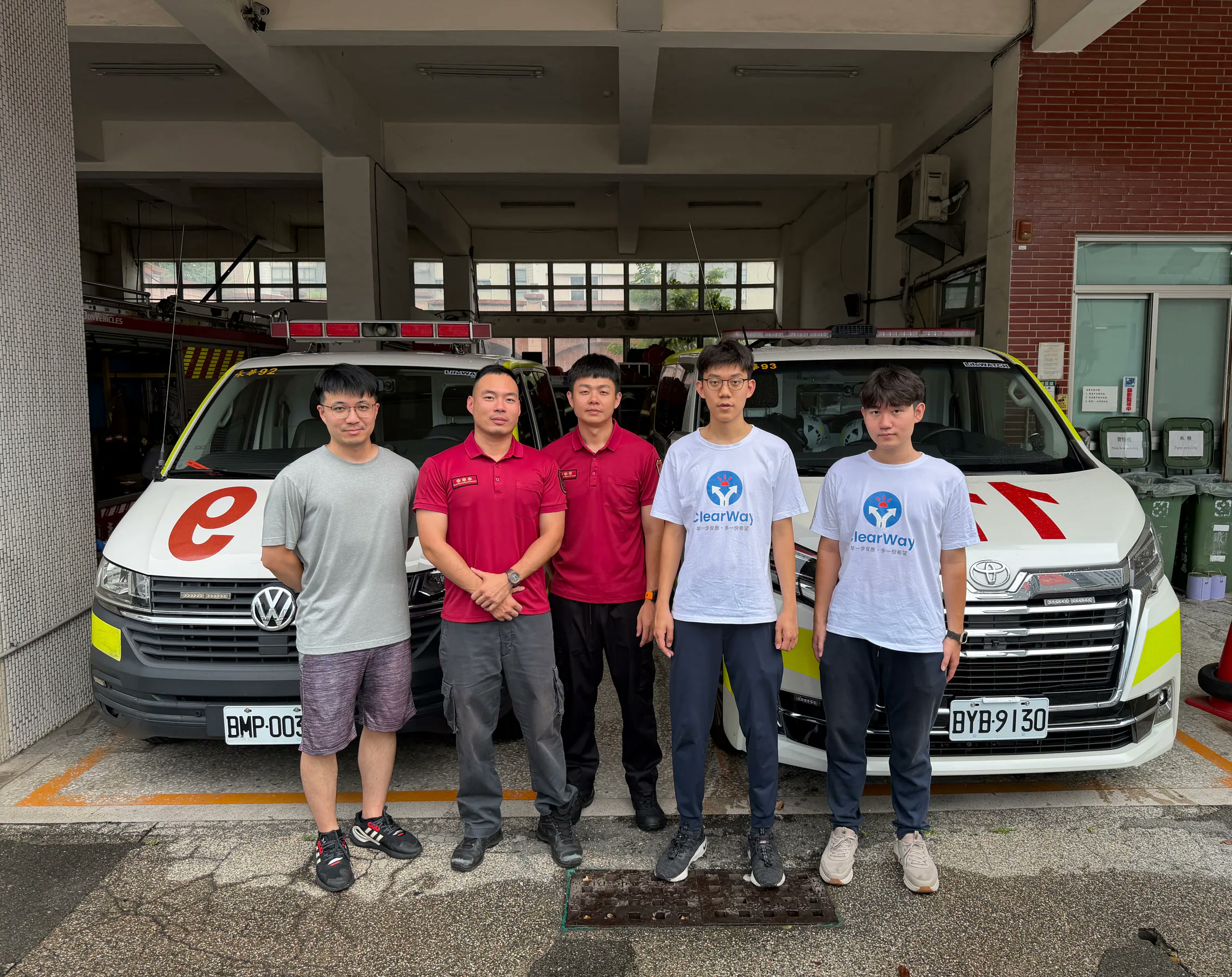
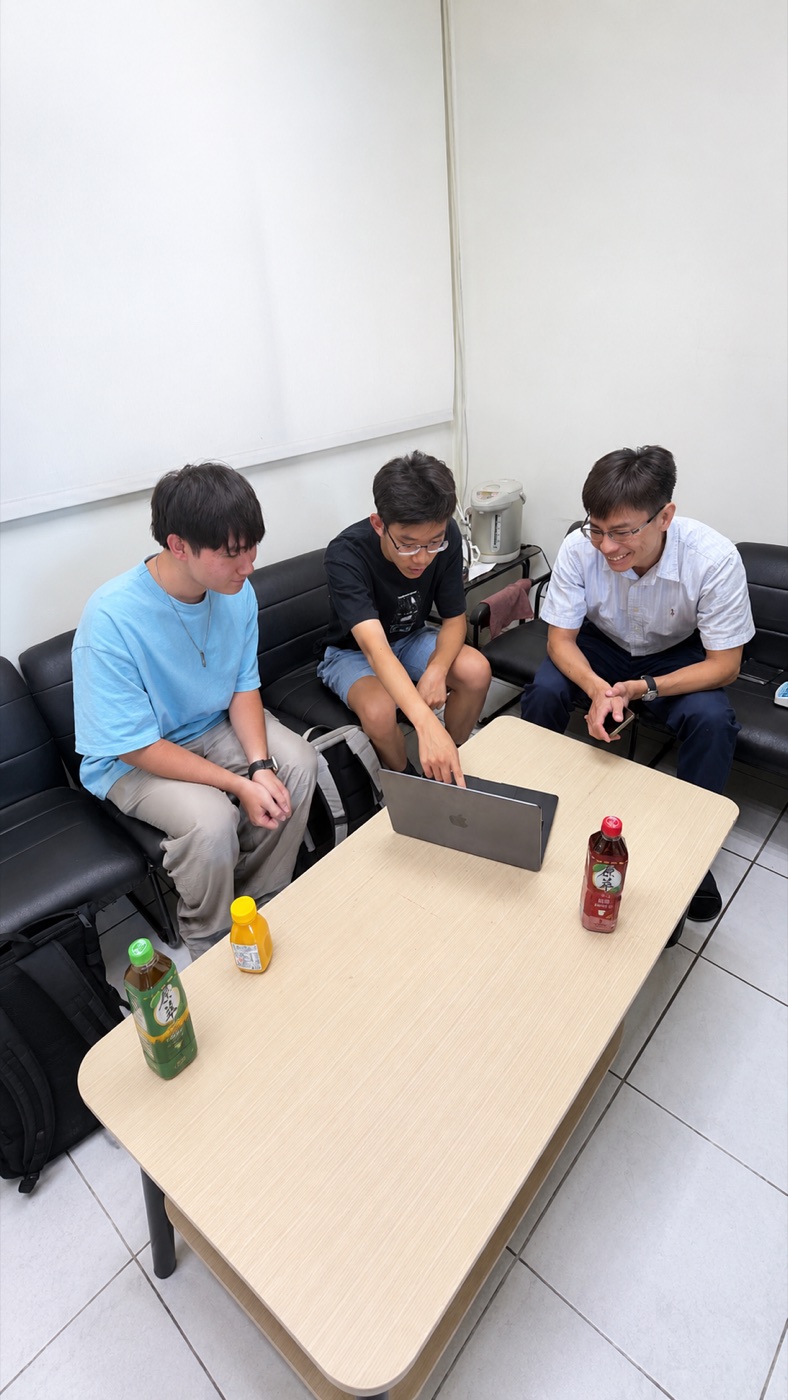
團隊多次拜訪臺南市政府消防局,近距離了解救護車設備與勤務情境,並與救護科科長及消防實務人員交流需求、導入限制與後續測試條件。Across several visits to the Tainan City Government Fire Bureau, the team learned from ambulance equipment and operating contexts, exchanging insights with the EMS division chief and frontline personnel about needs, adoption constraints, and future test conditions.
從設備、勤務流程到導入條件,讓現場經驗持續修正我們的假設。Equipment, operating routines, and adoption constraints continually reshape our assumptions.
每一階段穩定後才前進,不把尚未驗證的假設直接帶進道路情境。Each stage must be stable before the next; unvalidated assumptions do not go straight onto the road.
這些交流協助團隊修正理解,不代表消防局正式背書、認證或合作關係。These exchanges help the team refine its understanding; they do not imply formal endorsement, certification, or partnership.
查看團隊歷程Follow the team journeyClearWay 已完成早期端到端原型與校園內部測試。下一階段將以成大醫院周邊為規劃場域,依背景紀錄、虛擬觸發與指定情境提醒分段驗證。這項道路測試仍在籌備,尚未完成。ClearWay has completed an early end-to-end prototype and internal campus testing. The next phase is a staged validation planned around NCKU Hospital, progressing from background logging to virtual triggers and designated alert scenarios. This field test is still in preparation.
看看我們如何規劃測試See the validation plan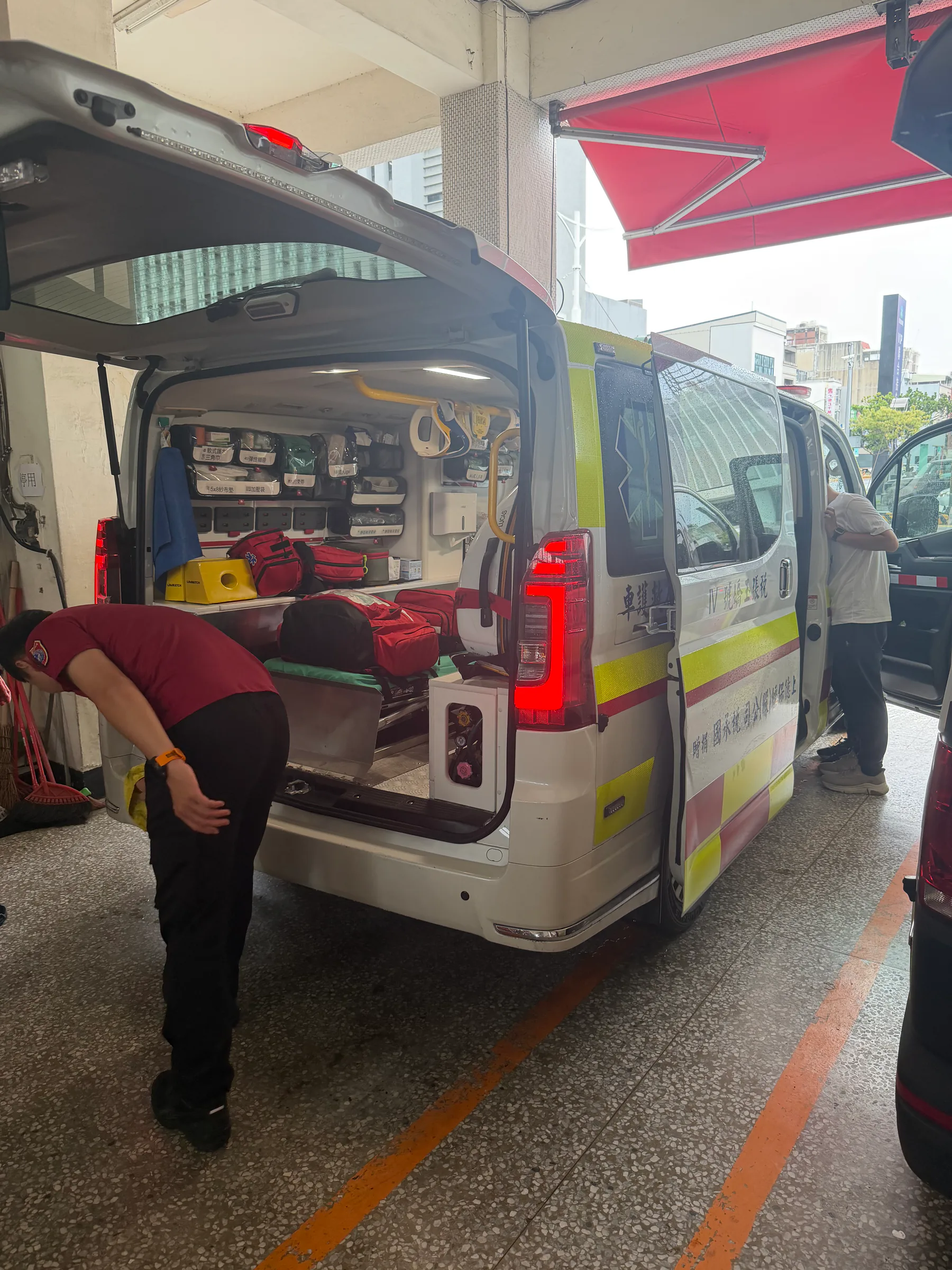 PLAN / 2026
一步一步累積信任Milestones, earned step by step
獎項不是終點。對 ClearWay 而言,它們是繼續把原型做得更可靠、把驗證做得更負責任的承諾。Recognition is not the finish line. It is a commitment to make the prototype more reliable and the validation more responsible.
入選 10 組實踐隊伍,並獲和泰特別獎。Selected among 10 implementation teams and recipient of the Hotai Special Award.
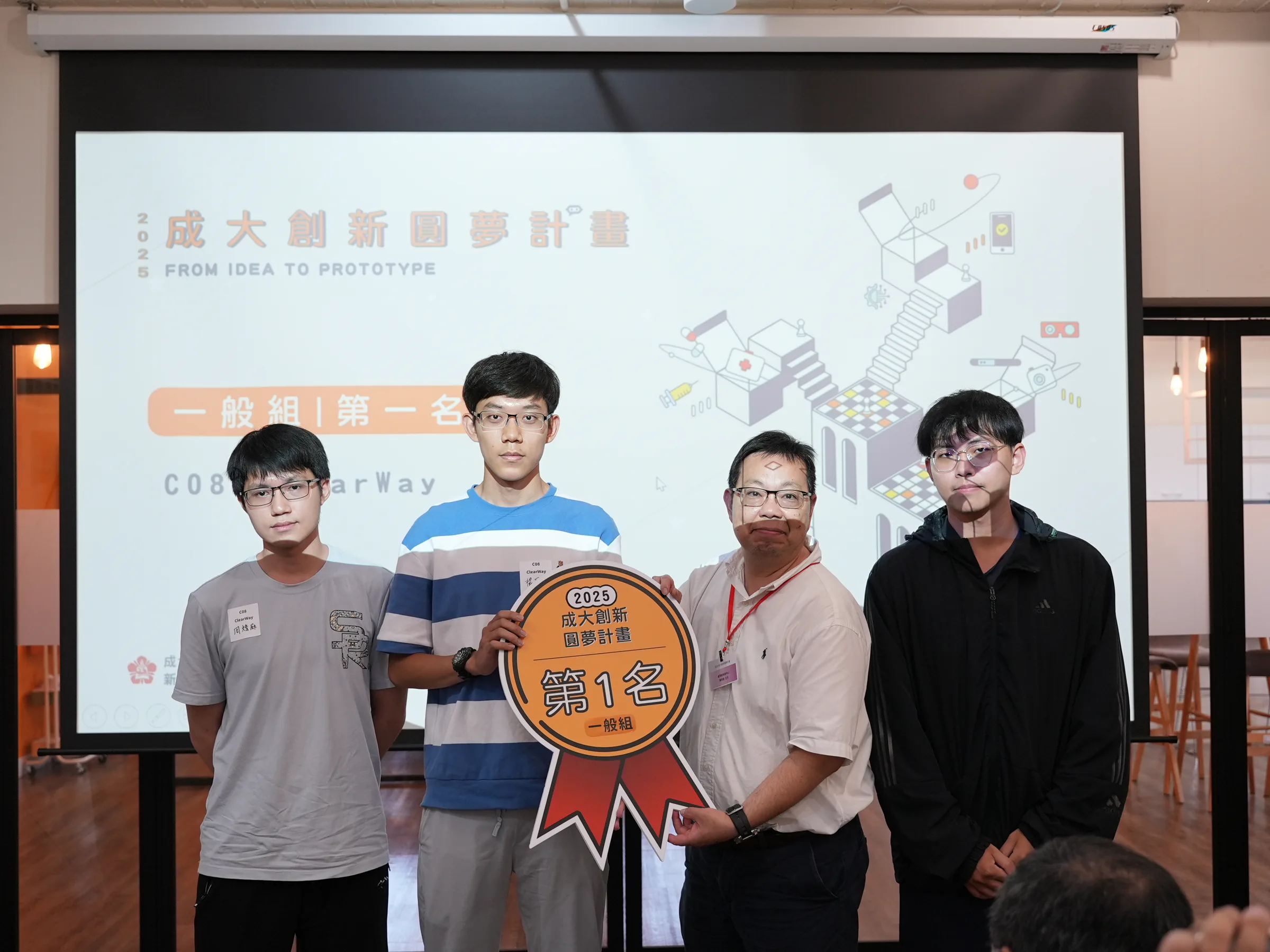
一般組第一名。First Place, General Division.
認識 ClearWay 的下一步,或與我們聊聊未來測試與公共安全交流。Follow ClearWay’s next step—or talk with us about future testing and public-safety exchange.