已建立Built
App 與管理後台Apps and dashboard
串接救護車端、駕駛端與管理後台,持續改進提醒與觀察工具。Ambulance and driver apps connect with a dashboard as alerts and review tools continue to improve.

場域進展Field progress
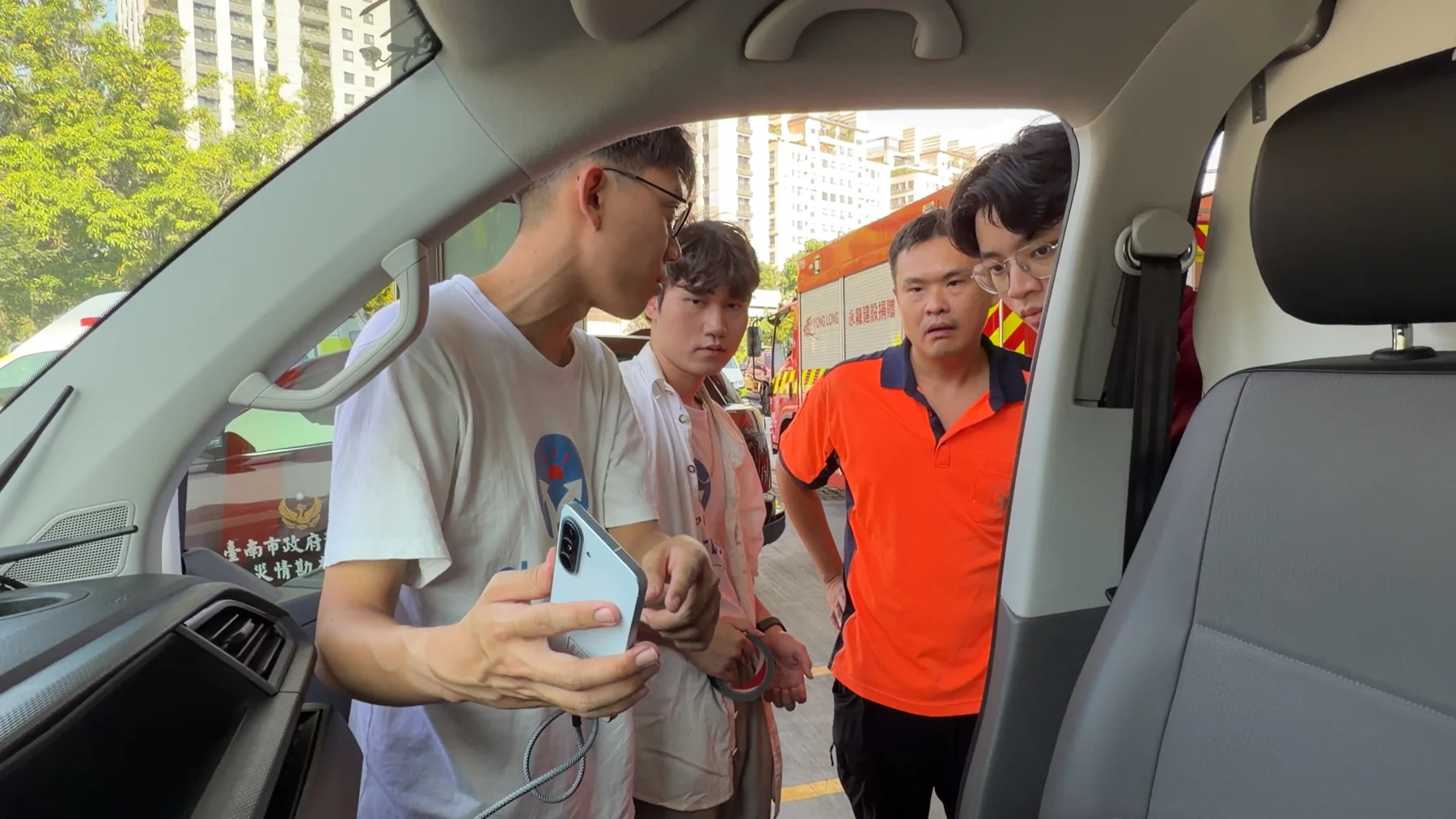
從救護車內的設備安裝,到和駕駛一起設定 App,ClearWay 正在小規模場域測試中,持續理解真實的使用需求。From installing equipment in ambulances to setting up the app with drivers, ClearWay is learning from everyday needs through small-scale field testing.
內容更新Last updated
已建立Built
串接救護車端、駕駛端與管理後台,持續改進提醒與觀察工具。Ambulance and driver apps connect with a dashboard as alerts and review tools continue to improve.
已展開Underway
進入救護車進行設備設定,並協助參與駕駛了解 App 操作。Equipment setup in ambulances and practical app guidance for participating drivers are underway.
持續進行Ongoing
整理實際相遇情境與駕駛回饋;提醒的使用效果仍需持續驗證。Real encounters and driver feedback inform the next changes. Effectiveness is still being evaluated.
場域交流與協作Field collaboration
安裝、操作說明、使用回饋,都是測試的一部分。這裡記錄我們與消防實務人員、復康巴士及接駁車駕駛一起完成的工作。Installation, practical guidance, and feedback are all part of testing. These are moments from our work with fire-service personnel, accessible-transport drivers, and a hospital shuttle driver.
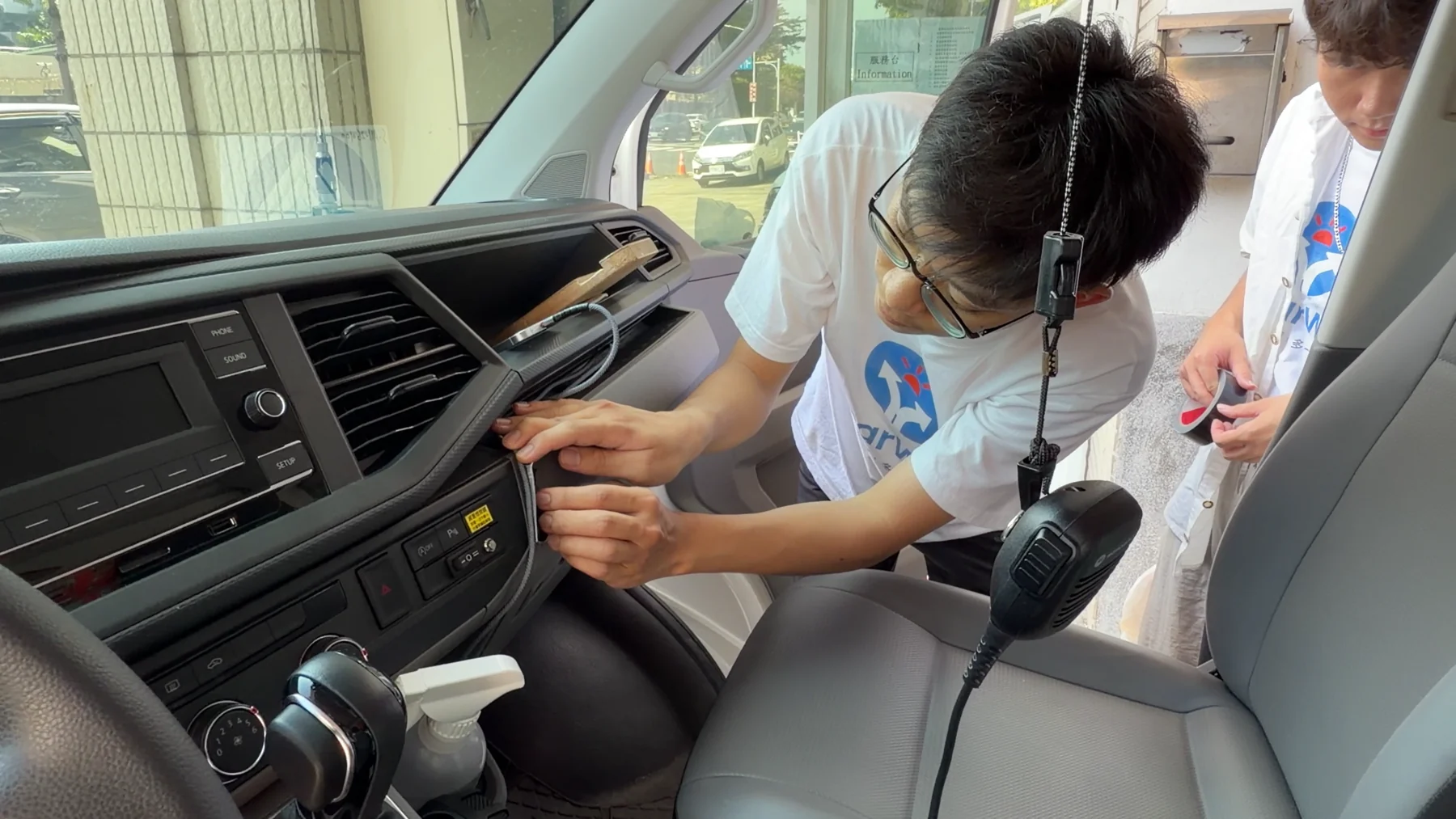
救護車端 · 現場安裝Ambulance side · On-site setup
手機要放在哪裡、如何供電、會不會影響既有操作,都需要在車內確認。團隊與消防實務人員交流使用情境,進行手機安裝與設定,把現場遇到的問題帶回系統調整。Phone placement, power, and existing in-vehicle routines all need to be considered on site. The team worked with fire-service personnel on phone installation and configuration, bringing practical questions back into development.
持續觀察:供電、連線、定位回傳與裝置狀態。Continuing checks: power, connectivity, location reporting, and device status.
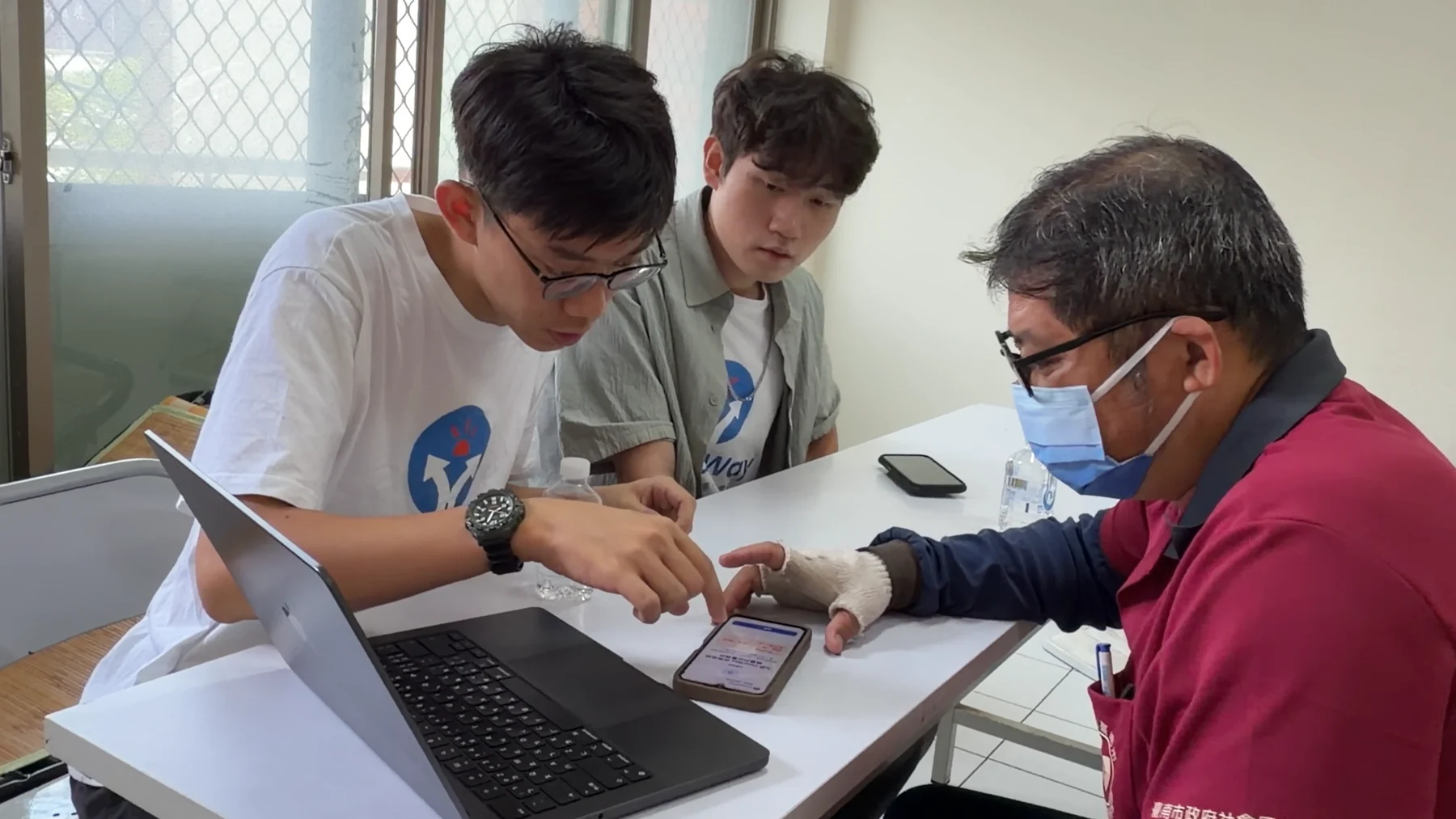
復康巴士 · 駕駛端設定Accessible transport · Driver setup
2026 年 10 月,團隊協助復康巴士駕駛設定 App、了解提醒方式與測試流程。從手機設定到日常使用習慣,每一次說明與提問,都讓我們更清楚實際使用需要什麼。In October 2026, the team helped accessible-transport drivers configure the app and understand its alerts and testing process. Questions about phone settings and everyday use helped clarify what drivers need in practice.
持續了解:設定是否順利、提醒是否清楚,以及使用上的疑問。Continuing conversations: setup, alert clarity, and questions that arise in use.
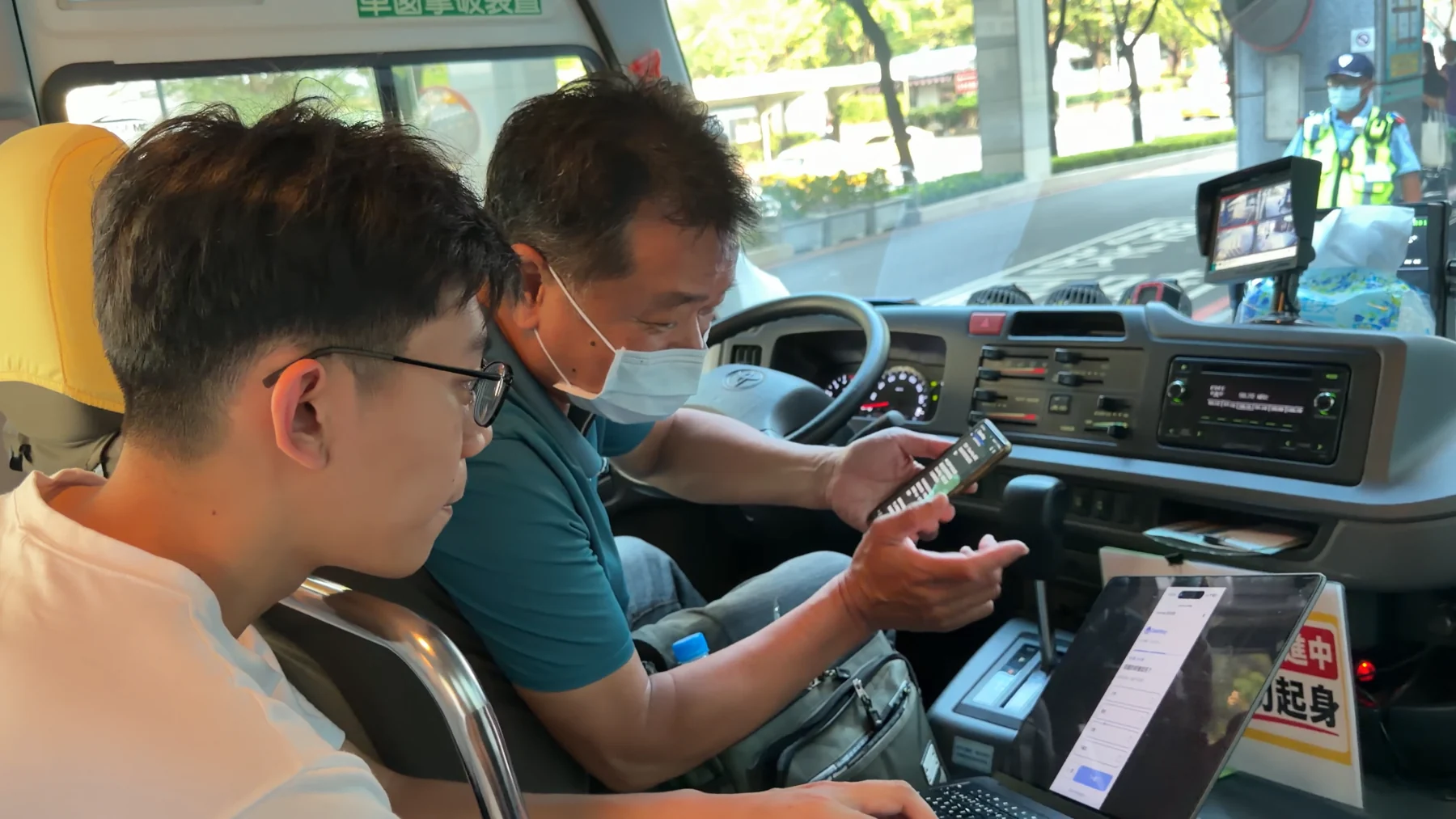
成大醫院接駁車 · 駕駛交流NCKU Hospital shuttle · Driver conversations
團隊與成大醫院接駁車駕駛交流,協助操作與設定,了解接駁勤務中的手機使用情境。駕駛的問題與回饋,持續協助我們調整說明、提醒體驗與後續測試。The team spoke with an NCKU Hospital shuttle driver, helped with app use and settings, and learned about phone use during shuttle work. Their questions and feedback continue to inform guidance, the alert experience, and further testing.
從駕駛的日常工作出發,逐步修正使用流程。Refining the experience around the driver’s everyday work.
正在確認什麼What we are checking
系統紀錄與駕駛的感受,需要放在一起看。我們持續檢查技術表現,也繼續了解提醒在真實車內是否有幫助。System records and the driver’s experience need to be considered together. We are checking technical behaviour while learning how useful the alerts are inside a real vehicle.
檢查位置更新、相對方向與觸發時機,回看漏報、誤報或延遲的情境。Review location updates, relative direction, and alert timing, including missed, unnecessary, or delayed cues.
持續檢查背景執行、電量、供電與網路切換,處理真實使用才會遇到的狀況。Check background operation, battery, power, and network changes under the conditions of everyday use.
了解提醒是否聽得見、方向是否清楚,以及頻率與時機是否合適。Learn whether alerts are audible and clear, and whether their frequency and timing fit the driving context.
場域測試仍在進行;提醒的實際效果與道路安全效益,仍需透過持續測試與回饋評估。Field testing is ongoing. The usefulness of alerts and any road-safety benefits still need to be evaluated through further testing and feedback.
測試的基本原則Principles in practice
參與方式、測試安排與資料用途,需先向參與者說明並確認必要同意。Participation, test arrangements, and data use must be explained, with the necessary consent confirmed.
道路測試 App 使用定位資料判斷接近情境,並保留測試紀錄供回看與改進。網站互動體驗使用模擬資料,不讀取裝置定位,也不連接即時救護車資料。The road-test app uses location to evaluate approaches and keeps test records for review and improvement. The website demo uses simulated data; it does not request device location or connect to live ambulance data.
提醒協助駕駛留意救護車;實際避讓仍須依警笛、號誌、路況與法規安全進行。Alerts help drivers notice an ambulance. Yielding still depends on sirens, signals, road conditions, and applicable rules.
接下來What comes next